
Usiglian del Vescovo back to Vinitaly
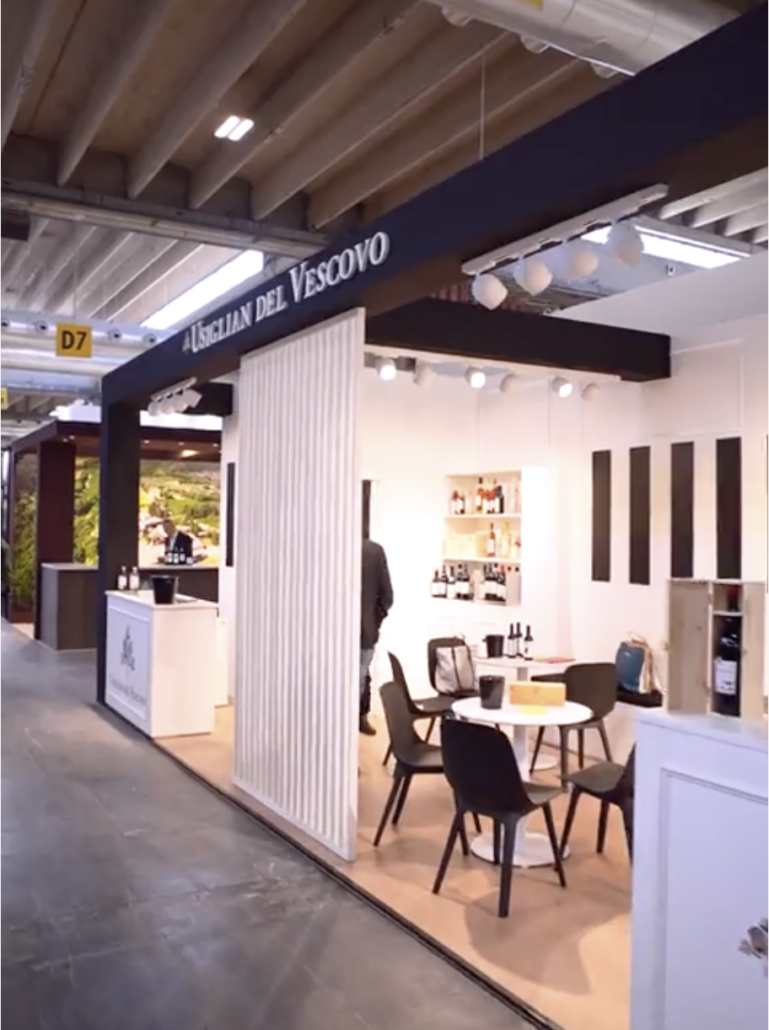
Vinitaly 2026: the value of the encounter between territory and vision for Usiglian del Vescovo
Vinitaly is never the same event twice.
The context changes, markets evolve, and so do the people walking through the halls. Yet for some wineries, like Usiglian del Vescovo, what remains constant is the way they position themselves within this change.
In 2026, once again, being present in Verona represents an important moment—not merely as a showcase, but as a space for relationships, dialogue, and listening.
Meeting again, for real
After years in which the wine market has been shaped by international tensions, Vinitaly increasingly returns to being a physical place where wine is told through direct human contact.
For Usiglian del Vescovo, this means bringing not only products, but an entire system made of people, expertise, and dedication.
Every tasting becomes a story—not only of aromas and flavors, but of processes, balances, and decisions made in the vineyard long before they reach the cellar.
The territory of Palaia as a starting point
Everything begins with the land.
The hills of Palaia are not just a backdrop, but the true matrix of the wines.
The sandy soils of marine origin, rich in fossils and shells, define very specific conditions: low water retention, high drainage capacity, and the need for the vine to develop deep root systems.
This environment leads to:
- naturally limited vegetative vigor
- greater mineral concentration in the grapes
- a marked sapidity in the wines
At Vinitaly, this translates into wines that do not aim to conform, but instead maintain a clear and recognizable identity, typical of Usiglian del Vescovo.
A viticulture focused on balance
The production model of Usiglian del Vescovo is built on a simple principle: guiding the vine, not forcing it.
Organic vineyard management is not an added feature, but a direct consequence of this approach. In soils like those of Palaia, fertility cannot be externally imposed—it must be built over time.
For this reason, the winery focuses on managing the balance of the territory through water regulation, soil management, and the diversity of plant life between the rows.
The result is a more autonomous vine, capable of adapting to seasonal conditions and expressing the territory in a more natural way.
The wines: coherence over style
In Verona, Usiglian del Vescovo presents wines that do not follow a logic of standardization, but one of coherence.
Ginestraio expresses the brightest and most saline side of the territory, with integrated freshness and an elegant structure.
Barbiglione, on the other hand, explores a deeper dimension, with greater aromatic complexity and structure, while still preserving the imprint of the soil.
Chianti Superiore represents a link to Tuscan tradition, filtered through the specific characteristics of Palaia.
These are not wines designed to please everyone, but wines that aim to remain faithful to the context in which they are born.
Looking ahead without changing direction
2026 represents a conscious continuity. In a rapidly evolving market, the temptation may be to adapt to every change. Usiglian del Vescovo’s choice is instead to maintain a clear direction, refining its work without overturning it.
In this sense, Vinitaly is a moment when the wine leaves the cellar, meets the world, and returns with new questions and new opportunities.
This post is also available in: Italian



Leave a Reply
Want to join the discussion?Feel free to contribute!